
Over the last couple of years, I’ve been thinking about that question a lot. The idea of running a company democratically first occurred to me while working through StatBid’s B Corp certification process. We’re still early in that process, with a submitted B Impact Assessment score of 95.1, and I’m proud of that. But what I value most is how it pushed us to ask better questions about who has a voice, how decisions get made, who holds power, and what kind of company we want to build.
For me, these questions tie back to one of the founding ideas of this country: people should have a say in the decisions that affect them.
Why does this matter to me? Because I think the way a company is governed affects whether it becomes extractive or generative. It affects who benefits, who carries the risk, whose voice matters, and whether the business is built for short term gain or long term stewardship. I believe we need more companies that distribute power and value more broadly, and I think democratic governance is one way to move in that direction.
That idea is a common assumption in U.S. politics. In business, it still feels unusual. Most small companies run on a founder model and I’ve run many businesses this way for years. A few people decide, and everyone else adjusts. That can work. But it can also create costs that only show up later, when the people expected to carry out a decision never really bought into it in the first place.
These questions feel especially relevant at StatBid because we’re a distributed team. We’re not a worker cooperative, and we’re not trying to force some pure model from a textbook onto a business that already has customers, obligations, and a leadership structure. We’re trying to build a version of shared governance that fits the company we actually have and the one we want to become.
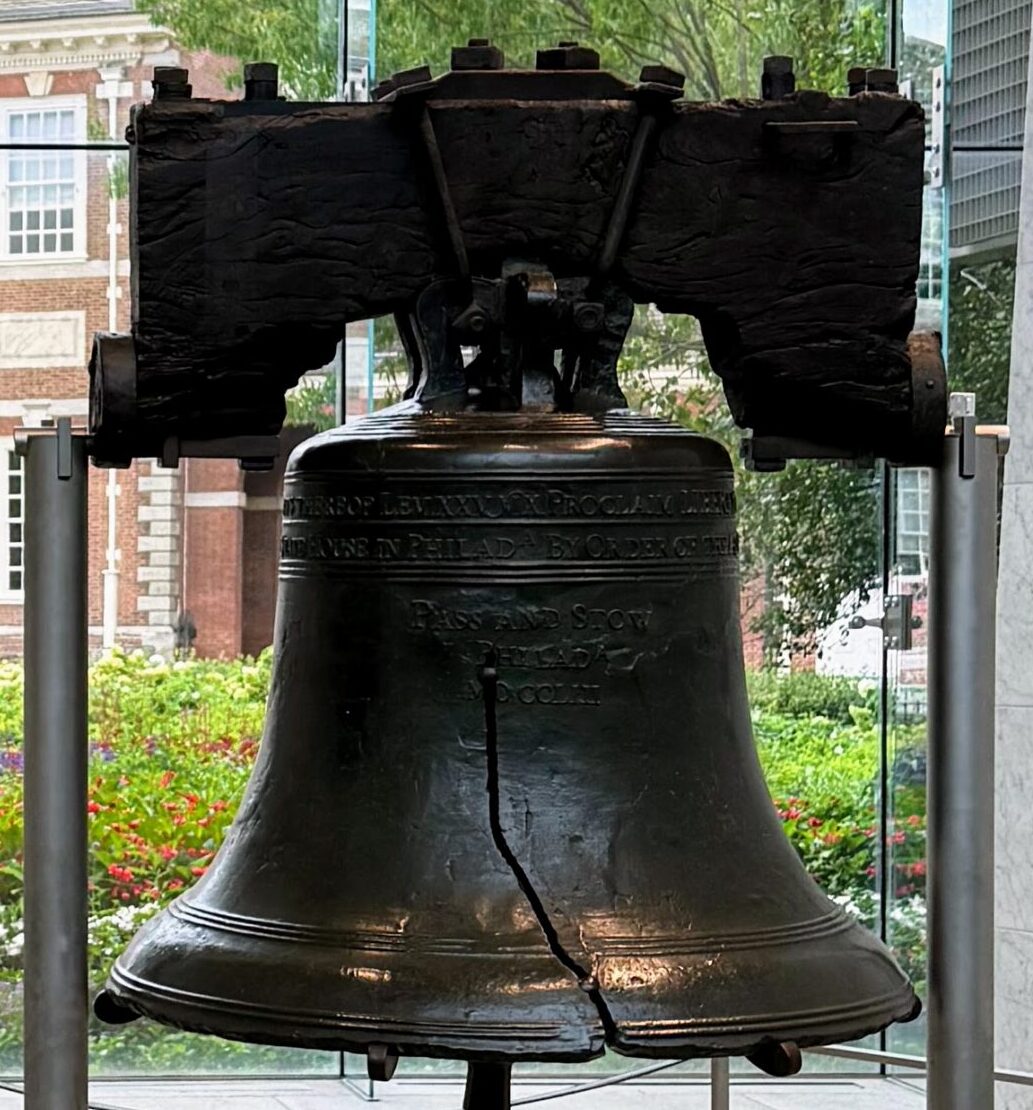
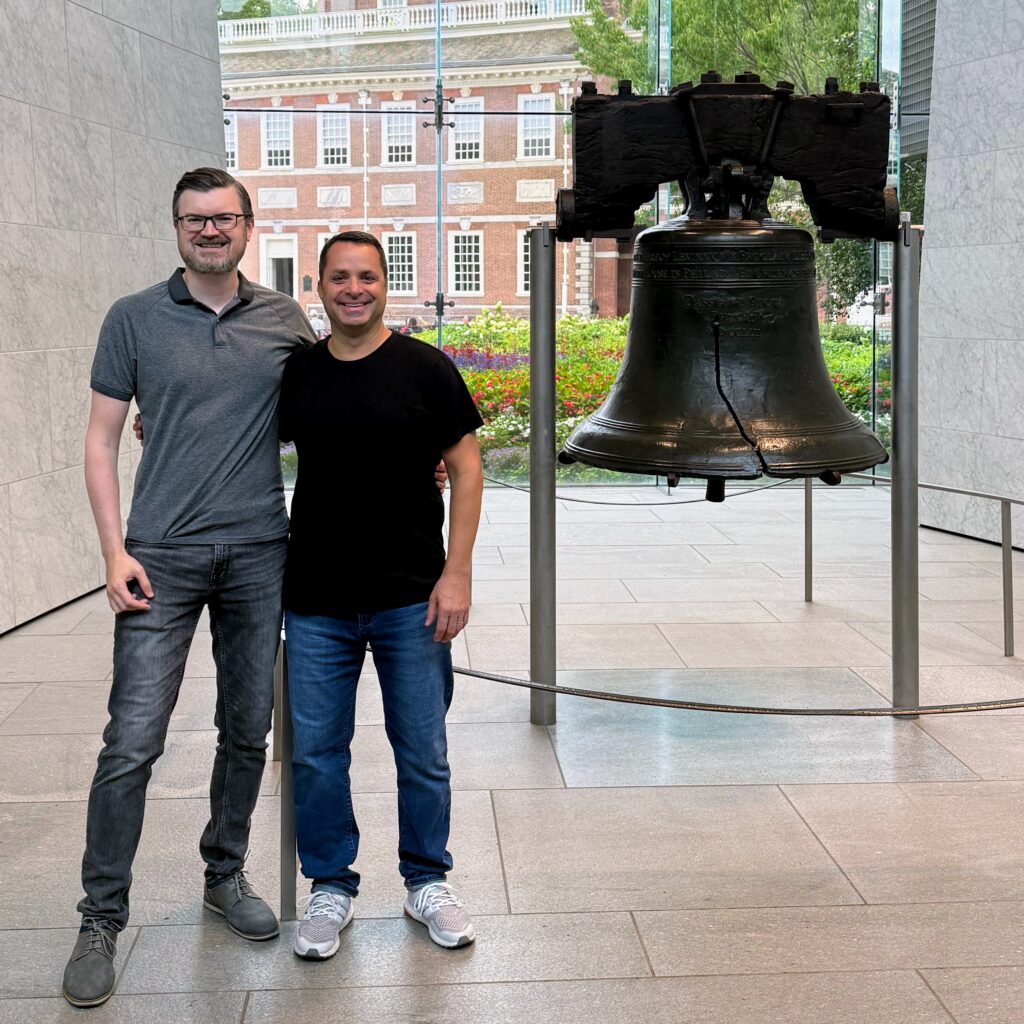
Last summer, over beers in Philadelphia, Andrew Flicker and I sketched out an early framework for what democratic governance at StatBid could look like. Which decisions should go to a vote? Strategic direction. Capital allocation. Company policies.
The first problem was scope. You can’t vote on everything. That would grind the company down fast. But if people only vote on harmless or symbolic matters, then you haven’t really changed anything. You’ve just dressed up the same power structure in better language.
Roy and I also made an early decision that mattered more than I appreciated at the time. The first vote would be a trial run. We reserved the right to keep the vote nonbinding while we worked through the process. In practice, that meant our governance experiment still included something like an executive branch. Leadership retained limited veto power while we figured out where the lines should be.
So far, we’ve run two votes, and each has shown us something different.
What the First Two Votes Showed
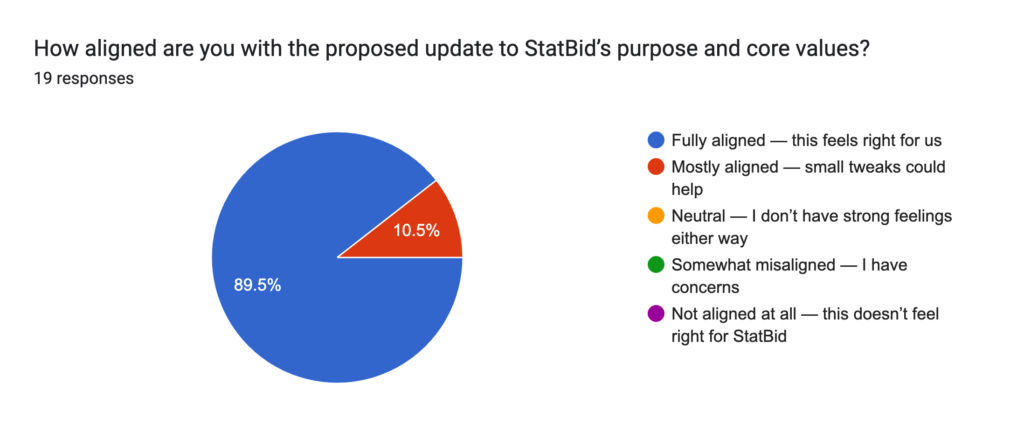
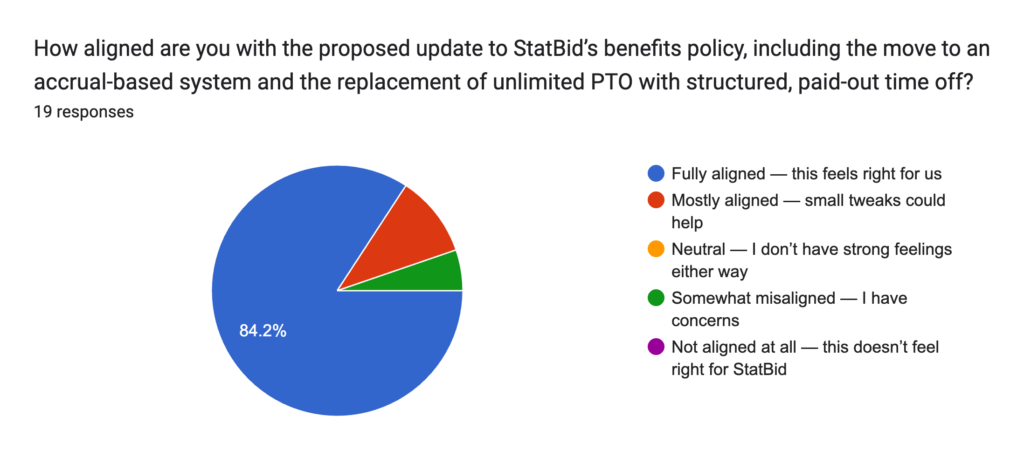
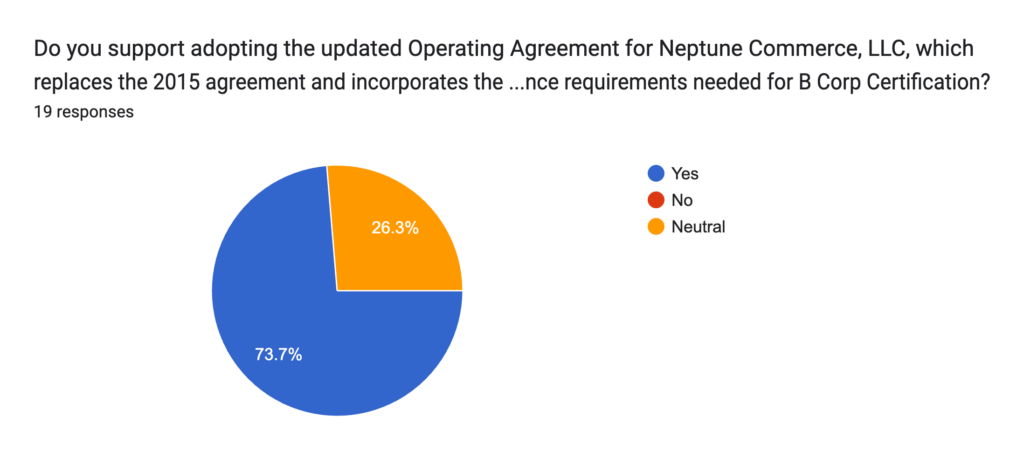
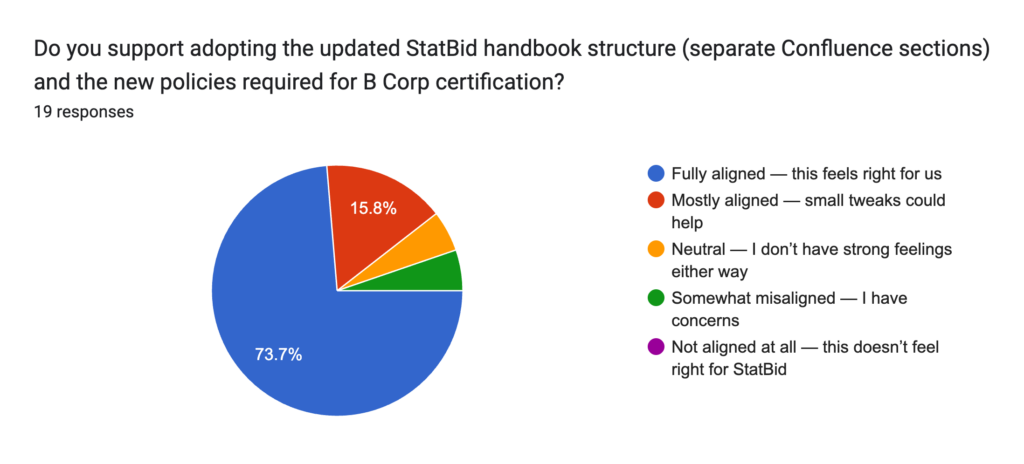
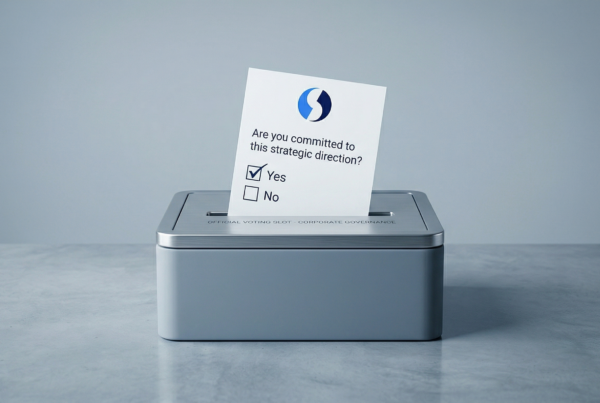
The first vote taught us something pretty basic. You cannot just announce that everyone gets a vote and expect participation to happen on its own.
Attention is fragmented for all of us these days. People are busy, Slack moves fast, and messages get buried. Even when people want to engage, they may miss the vote, misunderstand the question, or assume they can catch the next one.
I underestimated how much work it would take just to make the vote visible. We had to spend more time than I expected explaining it, following up, and making clear that it was not a symbolic exercise.
But once people engaged, the result was better than the original proposal. The first vote surfaced concerns and use cases we had missed, and the policy improved before it went into effect. That changed the cost calculation for me. Leaders usually count the time it takes to gather input. We’re often less disciplined about counting the cost of a decision that looks efficient at the top and then has to be corrected later because the people carrying it out saw the problem earlier than leadership did.
The second vote was more complicated and, for me, more revealing.
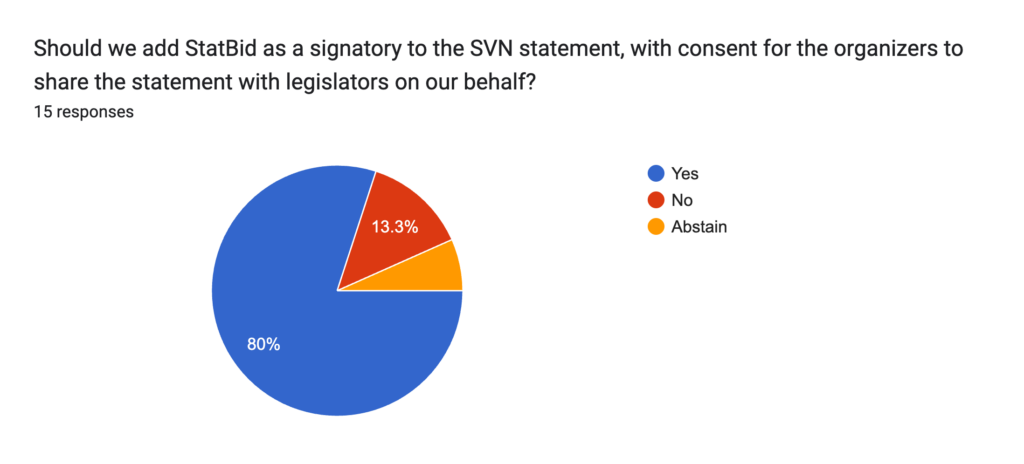
It involved a proposed public statement from Social Venture Network on a politically sensitive issue. By that point, Roy and I had already decided our early votes would not necessarily be binding while we worked through the process. We had also been explicit that our governance model still included limited executive veto authority.
That mattered here. Before we launched the vote, Roy and I talked about the nature of the issue and decided that a simple majority was not enough. If StatBid was going to attach its name to a public statement on a topic this sensitive, we wanted unanimity.
We did not reach a quorum, so the vote was not binding anyway. That was largely due to the circumstances around this vote. The timeline was compressed, and we did not do enough get-out-the-vote work. We also did not get unanimous support.
Even so, the vote was useful.
The responses were thoughtful, specific, and more varied than I expected. Some people felt the statement aligned with B Corp values, especially around justice and equality, and saw it as a mainstream expression of opposition to authoritarianism.
Others thought it did not go far enough, especially around actions affecting the free market. Some objected to language they saw as inflammatory or too polarizing, including the phrase “public capital punishment,” while others raised concerns about rule of law, immigration, and whether the company should take a public political position at all when a meaningful share of the country would reject the framing. One person agreed with the overall sentiment but was uncomfortable with a specific sentence.
We shared that feedback with Social Venture Network. More importantly for me, the vote clarified something I do not want to lose sight of: when a company speaks publicly, it is not just expressing the founders’ point of view. It is claiming to speak in the company’s name. That creates a responsibility to be a good steward of the people inside it, not just to act on my own instincts.
That can get blurry as an entrepreneur. You get used to carrying the vision and making the call. Over time, it becomes easy to miss the moment when stewardship turns into substitution, when the company starts standing in for your own views rather than representing a group of people who have chosen to build something together.
The second vote did not produce a clean consensus, but it did give us a clearer view of where our values align, where people draw different lines, and what it actually means to say we want this company to reflect more than founder preference.
Why This Matters in a Distributed Company
One reason this feels worth pursuing is that these questions look different in a distributed company.
Our team spans 13 countries. People are not bringing one shared national experience or one shared political environment to the table. They are working under different governments, legal systems, pressures, and forms of instability.
We have teammates in parts of the world right now dealing with major disruption to daily life. That is not an abstract reminder that politics affects work. It is part of our reality.
Even through all of that, we are still trying to do good work together, support each other, and build something durable. There is something hopeful in that. Not because we all agree on everything, we clearly do not. But because we are building a process for disagreement that still treats people equally.
That has become one of the more meaningful parts of this experiment. It keeps bringing us back to the same questions. What is this company for? What should be decided together? Where should leadership still have discretion? What kind of quorum do we need? When is a majority enough, and when is it not?
Those are not theoretical questions for us anymore. They are operating questions.
What We’re Actually Trying to Learn
I do not think democratic governance is a gimmick. But I also do not think it runs on good intentions alone.
The real question for me is not whether these ideas are legitimate in theory. There is a long history of worker cooperatives, employee ownership, codetermination, and participative management, even though we did not start there. We arrived at this framing through our own experience.
The research does not point to one perfect model, but it does suggest something important: participation works best when it is tied to real operating systems, clear decision rights, and enough structure for people to know when their input matters. That lines up with what we’ve seen so far.
I do not feel like we are trying to reinvent the wheel. The question is whether we can build a version that works here.
That takes structure, repeated communication, and transparency. It also takes enough trust for people to believe participation will actually change the outcome. And it asks something difficult of founders. If you are serious about sharing authority, then at some point your authority has to narrow. Otherwise, the whole thing risks becoming performative.
That is part of why I’m interested in what comes next.
Later this quarter, we’re hoping to run our first annual vote on capital allocation and strategic direction. Decisions about where resources go sit closer to the center of how a company actually operates.
For now, I think we’ve stepped into an already ongoing conversation and started testing a version that fits StatBid. Two votes in, the process is still rough in places. But the conversation is better, and in at least one case, the decision itself was better too.
That feels like enough reason to keep going. Not just because the conversation is better, but because I think we need more businesses that are built to share value, responsibility, and voice more broadly. If we want to move past extractive capitalism, governance has to be part of what we rethink.

Shilo Jones is the co-founder of StatBid and Poolaroo. Over the past 30 years, he’s built e-commerce businesses and helped merchants grow across multiple categories, with plenty of lessons earned the hard way. At StatBid and Poolaroo, the work is team first and operator led. Poolaroo functions as a living laboratory where we run experiments on our own dime, learn fast, and turn those lessons into practical wins we can share with more merchants. Shilo’s long term focus is sustainable commerce by 2050: thriving wages, circular products by design, and carbon neutral logistics.