
StatBid is officially a Certified B Corporation. Our verified score on the B Impact™ Assessment is 90, well above the 80 point threshold, and it reflects work done across the company over a long stretch of time.
This was a team effort that took several hundred hours to complete, and even if you did not participate directly, your support for this effort fueled myself and others who contributed to getting us to this point.
This memo runs longer than a standard announcement because the certification is not self explanatory, and because I think it deserves more than a line in a Slack channel. Some of you already know the term. Many of you have heard it in passing without much reason to look closely at what it is, why we pursued it, and what it commits us to. Those questions are worth some explanation. As always, dialogue on any of these points is welcome.
What certification is
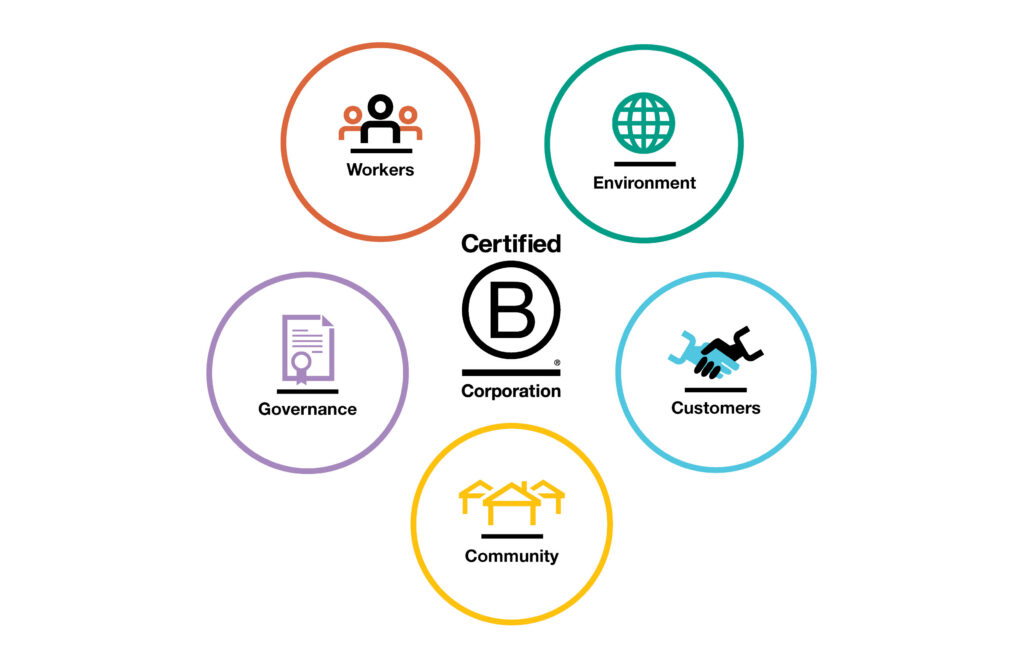
B Corp™ Certification is issued by B Lab™, an independent nonprofit. It is a certification framework, not a legal entity type, closer to LEED for buildings than to a business registration. A company completes the B Impact Assessment, which includes several hundred questions scored across governance, workers, community, environment, and customers, passes an audit of its answers, and meets B Lab’s legal requirement around stakeholder governance. Recertification happens every three years.
We submitted with a 95.1. The audit brought that down to 90. Going into that process, I was not fully confident we would get across the line. We did, and we did it with a score worth being proud of.
The standards are also getting tougher. B Lab’s newer framework moves away from the old flexible points model toward minimum requirements across seven “Impact Topics”, plus “Foundation Requirements” and continuous improvement milestones at years three and five. The transition is still being phased in, and I do not want to pretend I have every detail of our future recertification path pinned down yet. What I can say with confidence is that the bar is rising, and part of the next phase will be closing the gap between where we are and where those newer standards will require us to be.
What changed in our governance
Certification required us to amend our founding documents. By unanimous resolution between Roy and myself, we wrote into StatBid’s charter a commitment to creating material positive impact on society and the environment, and to stakeholder governance in decision making (which many of you voted on). In practical terms, the company’s governing structure now reflects obligations beyond shareholder return. That is one of the core commitments behind B Corp certification.
This was important to us for a simple reason. A values page is easy to write, but a charter amendment is harder to ignore.
StatBid’s commitment to creating positive impact stays with the company, and Roy and I intend for distributed ownership to be part of that future. We believe the people helping build this business should have the opportunity to share in what we are building. Now that certification is complete, creating a real path to ownership is one of the next major milestones we are working toward.
How this connects to what we care about
Our purpose is that everyone has the right to a thriving wage and a balanced life, regardless of employment status. Our vision is to build toward a future of sustainable commerce: circular products, net zero logistics, and good jobs for everyone. Those are easy things to say. B Corp is useful because it forces those ideas into practical decisions and operating principles.
StatBid’s own assessment identifies thriving wages, product circularity, and ecommerce carbon emissions as material issues. It treats long term contractors as workers, which matches how we already operate. Every hour a contractor works here gives them access to benefits in the business, and I do not know of many companies our size doing that. The assessment also scores the wage ratio between leadership and the rest of the team. If Roy and I extract most of the value, we lose points. Those are exactly the kinds of things a company should be forced to examine.
That is why I wanted us to do this. It keeps the gap between principle and practice visible, and it gives us something harder than aspiration to measure ourselves against. The governance amendment does the same job over a longer time horizon. It ties the company to the vision beyond any current leadership team, and the B Corp community gives us a place to learn from people who have been working on these problems longer than we have.
Our values are to be candid, conscientious, collaborative, constructive, creative, curious, and non-conformist. The one most tested by the daily work of this certification is conscientiousness: respecting the person, the human being, doing the work. The one most tested by the decision to pursue it at all is non conformist. Operating a company this way is not the default in 2026. We would like it to become the norm, and we would like to have been a part of why.
How I got here
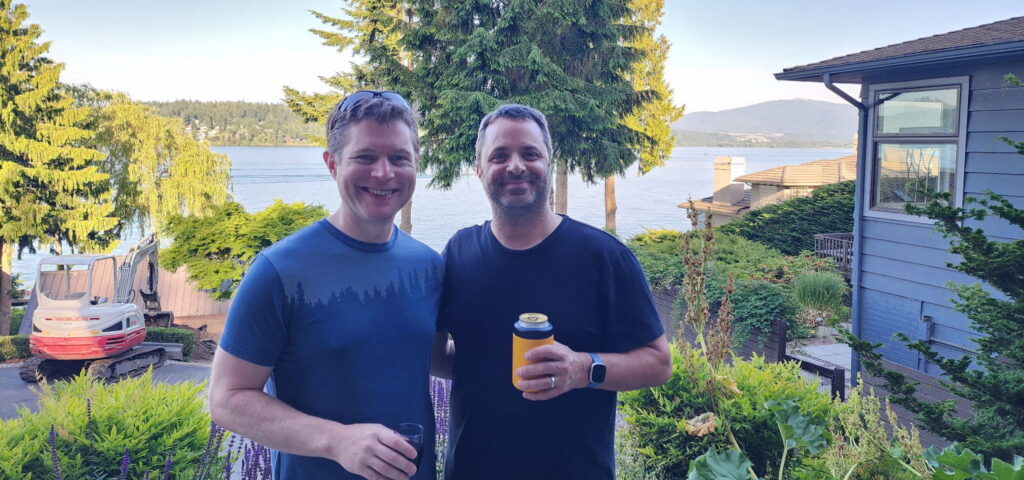
I have been an entrepreneur most of my working life. At one of the first companies I led, evo, I was in a strategic planning session in the early 2000s when someone asked why the company existed. My answer was shareholder primacy. Companies exist to make shareholders money.
Over time, that answer became less satisfying. As evo grew, I kept running into decisions that the shareholder primacy frame did not explain very well: paid volunteer time, giving back, investments in the workforce, and what profit is actually for. I was also surrounded by people who cared deeply about the communities and natural environments they were part of, and over time the team helped me see that these questions were bigger than efficiency or margin. I either had to conclude those decisions were mistakes, or admit that the frame itself was incomplete.
Later, Roy and I started StatBid. A few years in, once the business was viable, I hit a wall. We were helping clients sell more stuff more effectively, and I found myself wrestling with what that really meant in a world already shaped by overconsumption, waste, and all the downstream costs that rarely show up on a P&L. If StatBid was going to be the vehicle I spent the rest of my life on, it had to be attached to a problem I actually cared about.
Roy has a blunt way of putting the same issue. Unfettered fiduciary responsibility to shareholders, in his words, is structurally indistinguishable from sociopathy. A corporation built only to serve profit above all and for its own sake will behave that way unless something in its structure pushes against it.
I believe human ingenuity and entrepreneurship can solve many of the world’s problems. But until there are enough visible examples of successful companies operating on a different basis, the default stays in place. Part of the reason StatBid exists is to try to be one of those examples.
Why B Corp
Two things set B Corp apart, and both of them matter.
The first is the framework. There are other organizations working in this space, Conscious Capitalism, the Tugboat Institute, Business for Social Responsibility, Net Impact, Social Enterprise Alliance, and others. What distinguishes B Corp is that it does not stop at whether a company says it cares. It asks for evidence, measures where the company actually stands, and makes the gaps visible.
The second is the community. We are not going to solve circularity or net zero logistics on our own. Being part of B Corp means being part of a community of companies working on the same problems, many of them longer than we have been around. The goal is to learn from each other and build momentum together.
My own entry point was the assessment. Amy, Andrew, and I started using the B Impact Assessment well before the pandemic because we wanted a clearer picture of where we were falling short. The output was useful immediately. It gave us a map of weak points, and we knew it was going to take a lot of effort. The pandemic pushed the project to the side. When Mariel joined, she picked it back up and drove it forward, getting us to the point of submission. So while certification is an important milestone, it really reflects work that had been building for years.
Where we go from here
I do not have a finished roadmap. I would rather say that directly than fake one.
What I do know is this:
- Democratic governance matters to me. We have now embedded stakeholder governance into the company formally, but the bigger challenge is continuing to turn that idea into real practice over time.
- Distributed ownership is a priority. I want a mechanism that gives every team member the chance to hold a stake in this business.
- Thriving wage is still unfinished work. Not everyone at StatBid is there today, and closing that gap will require us to keep building a stronger, healthier business.
- On circularity and net zero logistics, we should learn from the companies already working in those areas inside the B Corp community instead of pretending we have to start from zero.
This is a work in progress. We are still learning what the B Corp community can be for us, in practice, and I would love to involve more of the team as we explore that.
Certification validates eleven years of work. It is not the end of the story. Most of the 2050 vision is still ahead of us. The next phase will depend on the same thing the last eleven years depended on: how we do the work, together.
Thank you to everyone who helped get us here, directly or indirectly. This is a meaningful milestone for StatBid, and one worth celebrating together.
—Shilo