 Made for Shopify Merchants
Technical SEO built for Shopify stores.
Shopify creates technical SEO problems by default. We find them, fix them, and make sure they don’t come back.




 StatBid Cleanup Started
Trusted by leading ecommerce brands




Shopify’s automation trap, solved.
For Shopify stores losing organic traffic to technical issues the platform creates — and can’t fix itself.
Shopify optimizes for commerce, not for crawlers.
The platform handles many technical SEO elements automatically, but that automation creates the problems. Every variant spawns a new URL. Default canonicals point to wrong pages. Apps inject scripts that tank page speed.
- Duplicate URLs for every product variant and collection filter
- Canonical tags that confuse Google about which page to rank
- App-injected scripts that push 3-second loads past 8 seconds
- Structured data that’s incomplete, misapplied, or missing entirely
A technical infrastructure layer built for Shopify.
StatBid operates as the missing technical layer between your theme and Google. We work in Shopify admin, in theme code, in Search Console — not in a generic SEO tool that doesn’t know what ?variant= means.
- Canonicals corrected across product variants, filters, and pagination
- Crawl budget reallocated to pages you actually want to rank
- App audits that kill what’s hurting you, defer what can wait
- Structured data implemented per Shopify’s constraints, not around them
Crawl budget waste is invisible,
until the traffic drops.
Googlebot has a fixed crawl budget per site. Shopify burns most of it on URLs you never wanted indexed in the first place. Here’s where it goes — and what we do about it.
Crawl budget waste
Every hour Googlebot spends crawling duplicate variant URLs, paginated filter combinations, and soft-404s is an hour it doesn’t spend on pages you need indexed. On a mid-size Shopify catalog, this can account for 60–80% of a site’s crawl activity.
Canonical conflicts
Shopify’s default canonicals are built for simplicity, not correctness. When they’re wrong — pointing a variant to the wrong canonical, or self-referencing a paginated page — Google consolidates ranking signals to the wrong URL and your real pages stop accumulating authority.
Where the daily budget actually goes
Indexing failures
Pages in your sitemap that Google has crawled but not indexed, or never crawled at all, are usually a downstream symptom of crawl budget waste upstream. We surface these weekly via Search Console data — not quarterly in an audit you’ll forget about.
Speed death by app
Third-party apps degrade page speed without warning. A loyalty widget, a review app, a popup — any of them can push your LCP past 4 seconds and your INP past 200ms. We profile the full app stack and identify the specific scripts killing your Core Web Vitals, not just the final score.
Six technical areas,
One coherent system.
We don’t hand you a 140-page PDF and wish you luck. We implement what we can directly, ticket what requires your dev team, and report on every change, so you always know what moved and why.
Crawling & Indexing
Robots.txt configuration, XML sitemap optimization, crawl budget management, and resolving Search Console indexing issues. We audit your current crawl data before touching a single file.
Canonical & Duplicate Content
Shopify’s canonical behavior, variant URL handling, and pagination. We test canonical behavior across your actual variant and filter URLs so Google understands which version of each page to rank.
Structured Data
Product, review, organization, breadcrumb, and FAQ schema. Proper implementation means rich results in search — star ratings, pricing, availability directly in Google.
Site Speed & Core Web Vitals
Theme bloat, app conflicts, unoptimized images, render-blocking scripts. We prioritize fixes that move the needle on real user experience metrics, not vanity numbers.
URL Structure & Redirects
Clean up redirect chains, fix broken links, manage URL changes during redesigns or migrations, and ensure link equity flows through your site instead of dying on 301 hops.
Shopify-Specific Limitations
Most agencies don’t know Shopify’s constraint map exists. We do. What you can control in theme code, what requires an app, and what needs a workaround — we’ve documented all of it.
Seen enough?
We’ll run a full technical crawl of your store and show you exactly what’s costing you traffic.
Takes 2 minutes. No commitment.
The tools we actually use
Google Search Console
We see what Google is actually crawling on your store, not what your sitemap assumes it should.

Screaming Frog
Full site crawl to surface duplicate URLs, broken canonicals, and redirect chains before Google does.
PageSpeed Insights
We go beyond the score to identify which specific scripts and embeds are creating real CWV impact.

Chrome DevTools
Script profiling and paint timing to pinpoint exactly which app or theme element is causing the slowdown.
SEMrush
Competitive benchmarking on crawl health, indexing coverage, and structured data against stores ranking above you.

Shopify Admin
Direct access to your theme code and app stack — so we see what’s installed, what’s conflicting, and what’s hurting you.
Here’s what changes.
And how you’ll know it’s changing.
A clear sequence of what improves, and a monthly report that proves it.
Part 1 — What Changes
The first 60 days, mapped out.
On Shopify stores, technical fixes follow a consistent sequence. Crawl waste is the first thing we eliminate. Indexing improvements follow within weeks. By day 60, the foundation is set and the results are visible in Search Console.
- Cleaner crawl profile – fewer wasted crawls, reduced crawl errors, more important pages prioritized.
- Improved indexing – more product and collection pages properly indexed, faster indexing of new content.
- Resolved duplicate content – clear canonical signals so Google ranks the right pages.
- Better Core Web Vitals – measurable improvements in LCP, INP, and CLS tracked against Google’s thresholds.
- Rich results eligibility – properly implemented structured data that qualifies for enhanced search appearances.
- Ongoing monitoring – proactive identification of new technical issues before they impact performance.

Part 2 — How You’ll See It
You’ll always know exactly where things stand.
Every month, across every active issue, you get clear visibility into what changed, what we did about it, and what’s coming next.
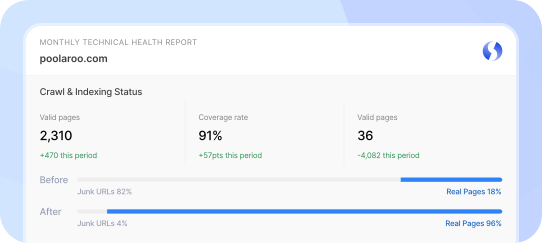
Your monthly technical health report
You’ll receive a single document every month, covering your crawl stats, indexing status, and Core Web Vitals trends, compared against the previous period so you can see direction, not just numbers.
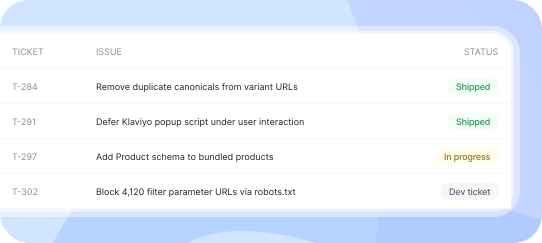
Prioritized issue tracker
Every identified issue has a clear status of what’s been fixed, what’s currently in progress, and what’s waiting. Nothing falls through the gaps between reporting cycles.
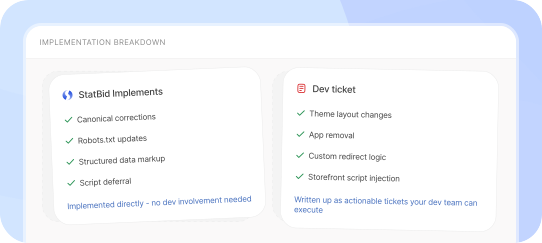
We implement what we can. We ticket what we can’t.
Issues we can fix directly — canonical corrections, robots.txt updates, structured data, script deferral — get implemented by us without touching your dev team’s backlog. Issues that require theme-level developer access get written up as clear, actionable tickets your team can execute without needing to understand the SEO context.
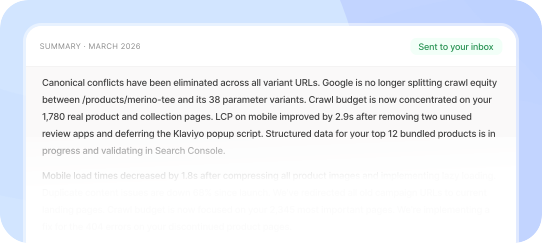
Regular communication on every change
After every reporting cycle you receive a plain-English breakdown of what changed, why it matters, and what we’re focused on next. Written for you, not a technical team, so you’re never left interpreting a spreadsheet on your own.
What our clients say

StatBid has been a partner to us since their inception. Their incrementality testing approach has been key to our profitability in search.
Nathan Decker
Director of Ecommerce · evo.com

StatBid goes beyond managing ad spend. We trust them completely as a true partner invested in our long-term success.
Brian Bianchetti
CEO · People’s Choice Beef Jerky

StatBid is much more than just a digital marketing company; they are a true partner with a culture of people helping people.
Deb Goldberg
Owner · Giving Tree Gallery

Having started with StatBid early in their start-up mode, it was clear that they were different from other PPC agencies we have worked with.
Patrick Gill
CEO · TackleDirect
Frequently Asked Questions
Technical SEO is the foundation – it’s about whether search engines can properly access, crawl, and understand your site. Regular SEO often focuses on content and keywords, but none of that matters if Google can’t index your pages properly or if your site is too slow to rank. We handle the infrastructure so your content and keywords have a chance to perform.
Shopify handles SEO differently than other platforms. It automatically generates URLs, canonical tags, and sitemaps – but these automatic systems create problems that require Shopify-specific solutions. Generic technical SEO advice often doesn’t apply, and standard tools flag issues that aren’t actually problems on Shopify while missing issues that are. We’ve worked with hundreds of Shopify stores and know exactly where to look.
Some fixes show impact within days – particularly speed improvements and crawl error resolutions. Indexing improvements typically take 2–4 weeks as Google recrawls your site. The full impact of comprehensive technical optimization usually becomes clear within 60–90 days as Google fully processes the changes and adjusts rankings accordingly.
Both. Many technical issues – robots.txt updates, sitemap optimization, structured data implementation, redirect fixes – we can implement directly. For issues requiring theme code changes or developer work, we provide clear, specific tickets that any competent developer can execute. We don’t just hand you a list of problems and wish you luck.
At minimum, we need view access to Google Search Console and Google Analytics. For comprehensive technical work, we’ll request collaborator access to your Shopify admin so we can review theme code, app configurations, and redirect rules. All access can be revoked at any time, and we follow strict data handling protocols.
Technical SEO requires ongoing attention. Apps update and break things. Theme changes introduce new issues. Google updates its crawling behavior. New products and collections create new URLs that need proper handling. We recommend ongoing monitoring and optimization to catch issues early, but we can also do one-time audits if you just want to know where you stand.
The Shopify SEO Audit is a one-time comprehensive evaluation – a snapshot of your current SEO health across technical, on-page, and strategic factors. Technical SEO service is ongoing optimization focused specifically on crawling, indexing, speed, and structured data. Many clients start with an audit to understand the full picture, then move to ongoing technical SEO to keep the foundation solid.
Pricing depends on your store’s size, technical complexity, and the scope of work needed. We offer both project-based work (specific technical fixes or migration support) and ongoing monthly retainers (continuous monitoring and optimization). Contact us for a custom quote based on your situation.